
Space exploration just got a massive streaming upgrade. After a stellar box office run earlier this spring, directors Phil Lord and Chris Miller’s sci-fi blockbuster Project Hail Mary has finally made its streaming debut on Amazon Prime Video this holiday weekend. Within 24 hours of dropping on July 3, the Ryan Gosling-led adaptation skyrocketed straight to the #1 spot on the platform.
Let's get this watch party started! Stream #ProjectHailMary now on @PrimeVideo. pic.twitter.com/gatGYUJP8p
— Prime Video (@PrimeVideo) July 3, 2026
Amazon CEO Andy Jassy personally recommended the film on Friday. “Truly outstanding and unique” is how Jassy decribed it.
Whether you are a longtime fan of Andy Weir’s bestselling 2021 novel or a casual viewer who just finished watching Ryland Grace navigate interstellar astrophysics from your couch, that emotional final act leaves a lot to process.
Let’s break down the Project Hail Mary ending, look at how the production brought everyone’s favorite alien companion to life, and analyze the biggest book-to-movie differences.
Warning: Massive, light-year-sized spoilers ahead for Project Hail Mary!
Who is Rocky? The Science Behind the Fan-Favorite Alien
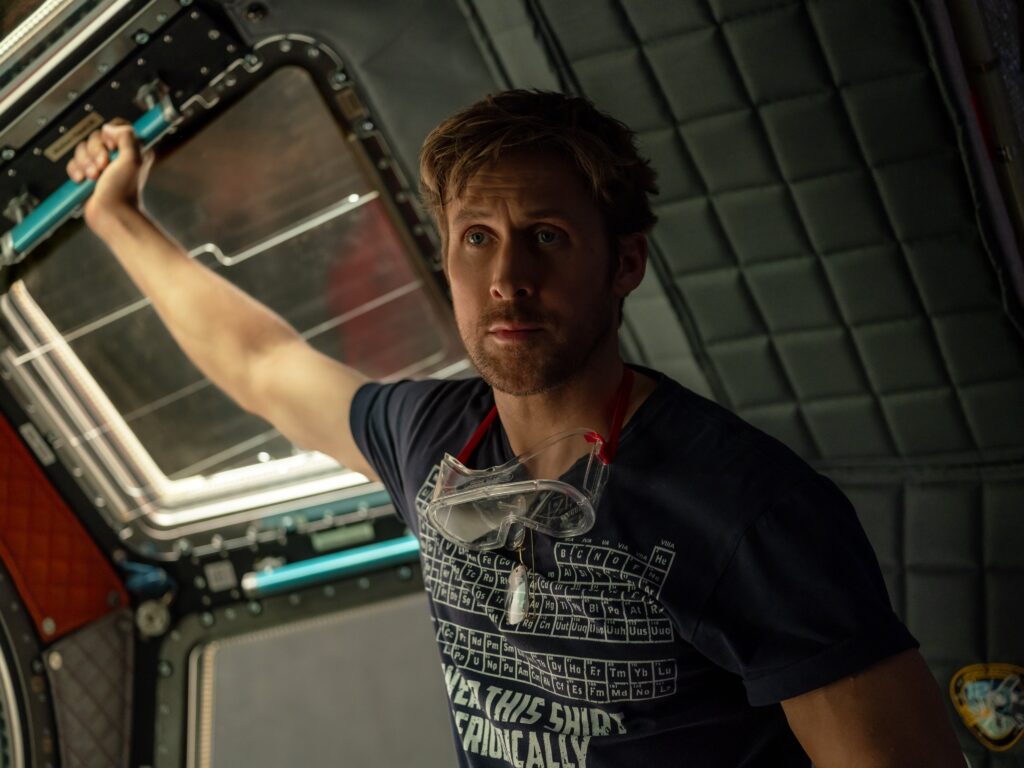
Before we can unpack the ending, we have to talk about the true heart of the film: Rocky, an engineer from the star system 40 Eridani. When Ryland Grace (Ryan Gosling) wakes up with amnesia on the Hail Mary, he realizes his crewmates are dead and he is humanity’s sole hope to stop “Astrophage”—a microscopic organism absorbing the sun’s energy and triggering a global ice age.
But Grace quickly learns he isn’t alone. Enter Rocky.
To bring a completely non-humanoid alien to life, the filmmakers relied on a stunning combination of practical puppetry by artist James Ortiz and seamless digital effects.
- The Biology: Rocky’s species possesses a hard, silicate-based “shell” with five-fold symmetry and no eyes. They view the universe entirely through echolocation (sonar).
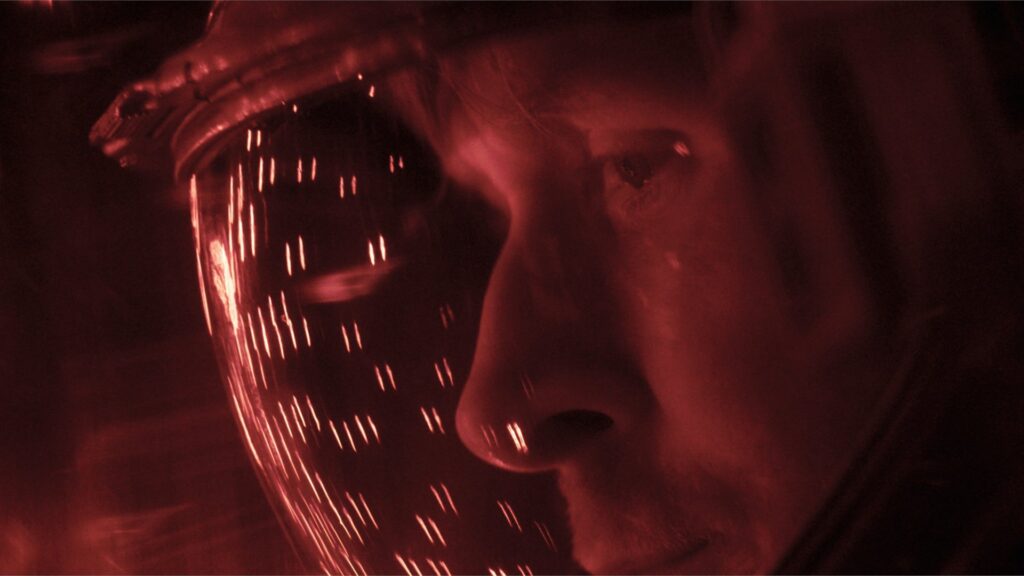
- The Communication: Rocky breathes superheated ammonia and communicates through chords of musical notes. The film brilliantly translates this by using a digital HUD on Grace’s spacesuit visor to overlay subtitles, visualizing how the two characters decode each other’s languages using math and physics as a baseline.
The Project Hail Mary Ending Explained: Why Does Grace Stay?
The climax of the film hinges on a desperate race against time. Grace and Rocky successfully isolate “Taumoeba”—a predator organism that eats Astrophage—and prepare to return to their respective home planets to save their suns.
However, right after they part ways, Grace discovers a catastrophic flaw: the Taumoeba have breached their containment on Rocky’s ship, threatening to eat through its fuel system and leave Rocky stranded to die in the vacuum of space.
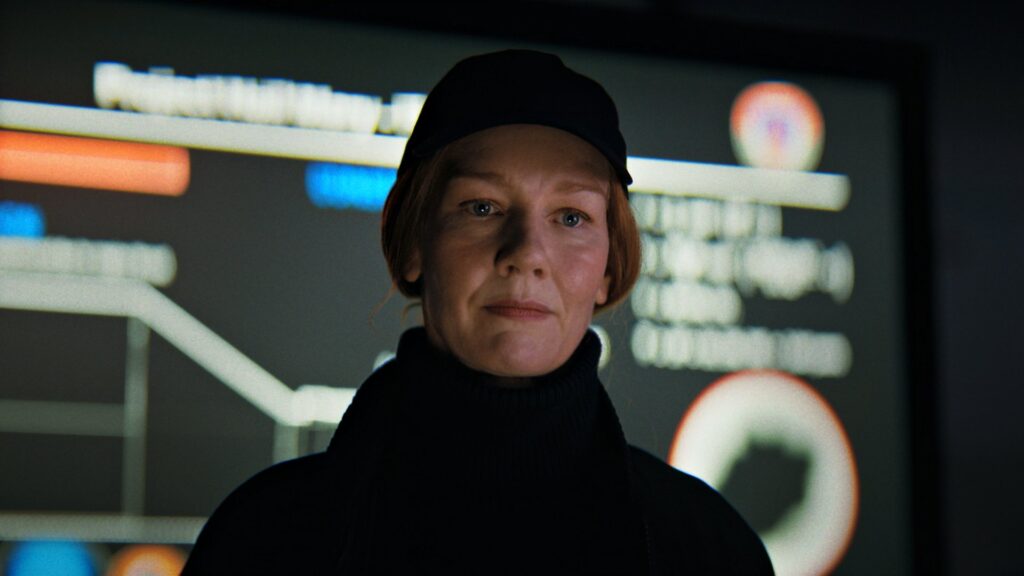
This triggers the definitive, emotional turning point for Ryland Grace. Through a series of memory flashbacks, Grace remembers a dark truth about himself: he was not a brave volunteer. He was forced onto the Hail Mary mission against his will by Earth’s administrative leader, Eva Stratt (Sandra Hüller), and even had to be forcefully drugged to get on the ship.
The Ultimate Redemption: Despite initially being a coward who had to be forced into heroism, Grace makes a completely voluntary, selfless choice at the end of the film. He turns his ship around, burns through his own return fuel to rescue Rocky, and sacrifices his only chance of returning to Earth.
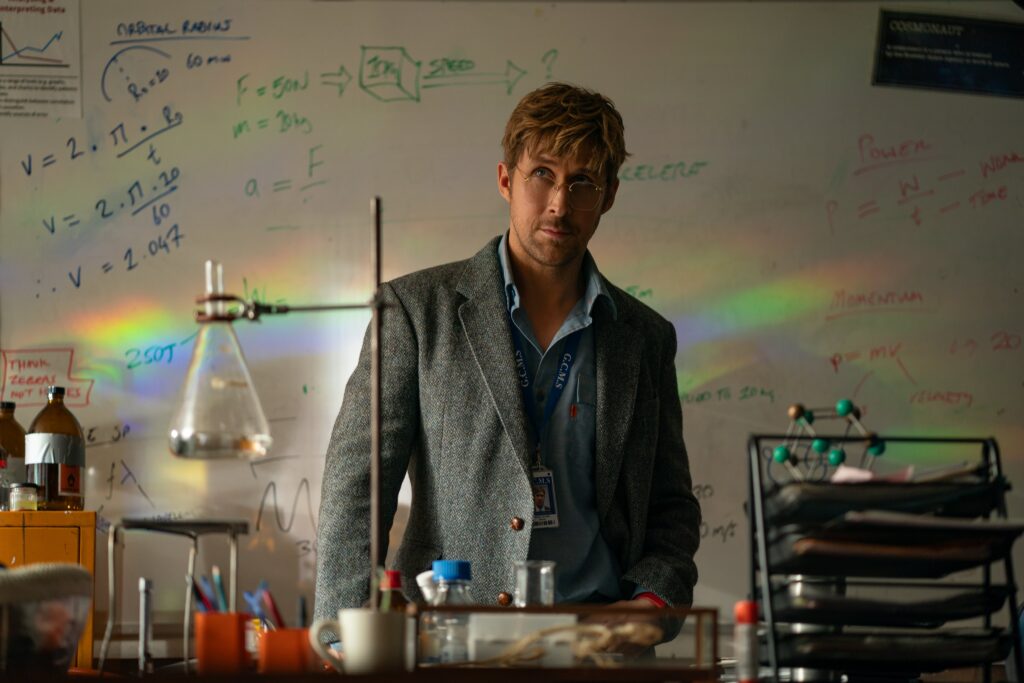
In the final scene, we jump forward in time. Grace is living on Rocky’s home planet, Eridani, surviving in a specialized dome built by his alien friends. He looks healthy, happy, and is doing what he does best: teaching a classroom full of young Eridanians about the basics of science. Rocky arrives, the two exchange a joyous “Fist my bump!”, and Grace receives telemetry from Earth confirming that the automated probes he sent back successfully saved humanity.
Major Changes: How the Movie Differs from Andy Weir’s Book
Screenwriter Drew Goddard faced a monumental task adapting a 500-page book rooted heavily in solitary internal monologues and dense orbital mechanics. While the film is incredibly faithful, several key elements were streamlined for a 156-minute cinematic runtime.
| Movie Version | Andy Weir’s Original Novel |
| Streamlined Scientific Explanations: Focuses on the immediate visual stakes of the experiments. | Heavy Mathematical Derivations: Explains the precise physics, chemistry, and fractions of fuel consumption down to the decimal point. |
| A More Sympathetic Stratt: Sandra Hüller plays Eva Stratt with an iron will, but her decisions feel more grounded in utilitarian survival. | A More Ruthless Stratt: The book emphasizes her absolute global authority, making her actions border on a legal dictatorship to get the ship built. |
| The Flashback Sequencing: Scattered intentionally throughout the second act to match Grace’s emotional realizations about his past. | Linear Amnesia Recovery: The book treats the memory triggers as a strict, parallel puzzle that unlocks step-by-step alongside the present-day plot. |
Will There Be a Sequel?
While Andy Weir has not written a literary sequel to Project Hail Mary, the film’s massive critical acclaim and explosive streaming numbers mean Amazon MGM Studios will likely be looking at options. However, because the ending neatly ties up the survival of both Earth and Eridani, any potential follow-up would have to invent an entirely new interstellar mystery.
For now, the film stands as a perfect, self-contained triumph of optimistic science fiction.