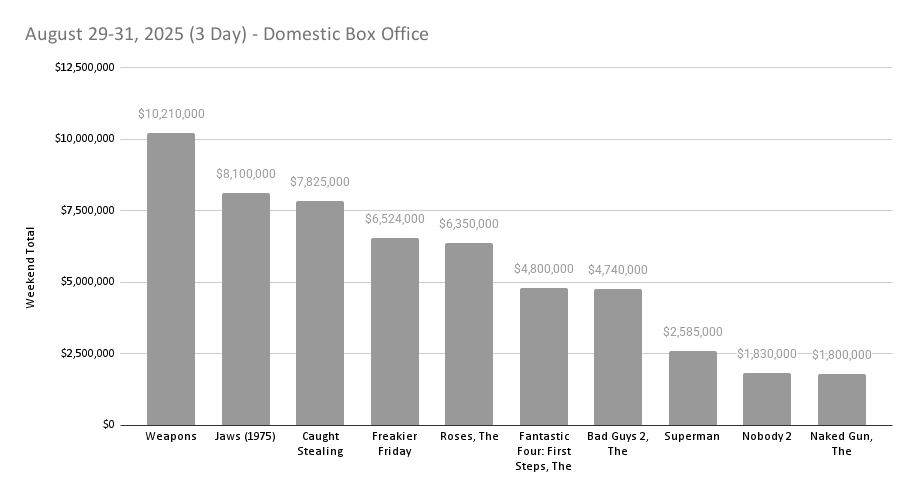
The movie that is widely considered the first blockbuster movie returned to U.S. theaters this weekend. Jaws snapped up $8.1 million in box office over the Labor Day weekend. The Universal distributed film played in 3,200 theaters. Meanwhile, Weapons, the Warner Bros. horror fest, led the box office with $10.2 million.
The Steve Spielberg directed Jaws is about a New England police chief, a shark hunter and a scientist who have a showdown with a huge white shark.
While there were big, popular movies before it, Jaws (1975) is widely considered to be the first “modern” blockbuster. It didn’t just earn a lot of money; it fundamentally changed how the film industry operates.
Here’s why Jaws is credited with creating the blockbuster as we know it today:
- Wide Release Strategy: Before Jaws, most films opened in a few major cities and gradually expanded to other theaters over months. Universal Pictures, the studio behind Jaws, took a massive risk and released the film simultaneously in over 400 theaters across the United States. This “saturation” release strategy created a sense of urgency and event that was unprecedented.
- Intense Marketing: The studio backed the wide release with an enormous, coordinated marketing campaign, heavily utilizing TV commercials, which was a new and costly approach at the time. This built widespread hype and anticipation before the movie even opened.
- The “Summer” Release: Traditionally, studios saved their biggest and most prestigious films for the holiday season. Jaws proved that a film released during the summer, when teenagers and families were out of school, could be a massive moneymaker, establishing the summer movie season as a crucial period for Hollywood.
- High-Concept and Merchandising: Jaws was a “high-concept” film—a simple, easily digestible premise (a giant shark terrorizes a beach town) that could be communicated in a single sentence and was ripe for merchandising. This model of filmmaking, focused on spectacle and broad appeal, became the new norm.
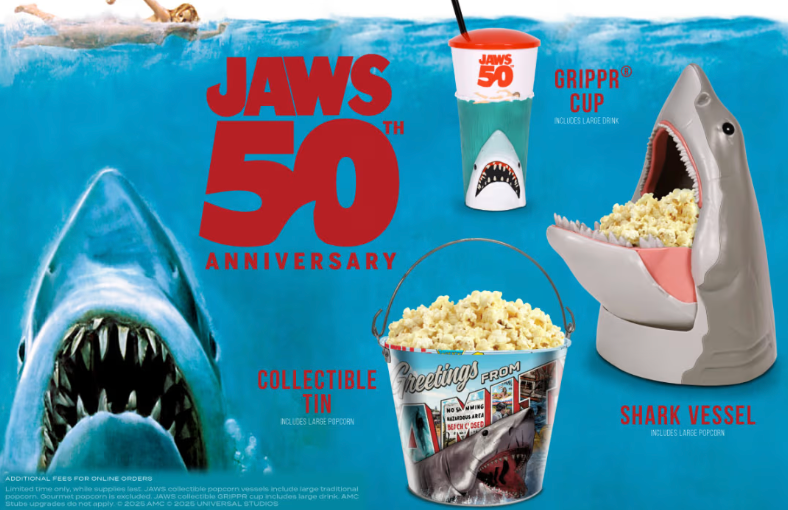
For the 50th anniversary release, AMC Theatres featured a “Shark Vessel” popcorn bucket. Furthermore, a Grippr Cup and collectible tin were available. Even Spielberg couldn’t envision 2025’s popcorn buckets.
In short, while other films like The Exorcist or The Godfather were huge box office hits, Jaws was the film that combined a massive marketing push, a simultaneous wide release, and a high-concept premise to create a cultural event that changed the industry’s business model forever.